Santa Clara occupies a unique position in the heart of Silicon Valley that goes well beyond its reputation for technology and innovation. As a core city of Santa Clara County, it sits at the intersection of some of the South Bay’s most active clinical corridors — bordered by San Jose to the east, Sunnyvale to the west, and Cupertino to the south — and its healthcare workforce reflects the professional intensity that defines everything else about this community. From the established neighborhoods of Rivermark and Agnew to the residential pockets near Mission Santa Clara de Asís, clinical professionals in Santa Clara serve a patient population that is as diverse, demanding, and medically complex as any in California. And every one of those professionals operates under the same non-negotiable professional baseline: current, valid BLS, ACLS, and PALS training that meets American Heart Association standards on a two-year renewal cycle.
The public health urgency behind that baseline is real and locally grounded. The American Heart Association reports that cardiac arrest strikes nearly 350,000 Americans outside hospital settings every year — and survival rates improve dramatically when trained responders act within the first few minutes. In Santa Clara, where the dense residential corridors around Kaiser Permanente Santa Clara Medical Center on Homestead Road blend into tech campuses and active commercial districts, the proximity between trained clinical professionals and emergencies in progress is part of what makes maintaining current AHA training so consequential. The healthcare workforce at Santa Clara Valley Medical Center, Stanford Health Care, and Kaiser Permanente facilities forms a regional clinical web that depends on every link staying current — and compliance isn’t optional. Safety Training Seminars supports this workforce by offering both instructor-led and Self-Guided Learning™ pathways for BLS, ACLS, PALS, NRP, and First Aid courses, giving Santa Clara’s clinical professionals genuine options for how they successfully complete their course and receive their AHA Course Completion eCard.
Overview of CPR Training Options in Santa Clara
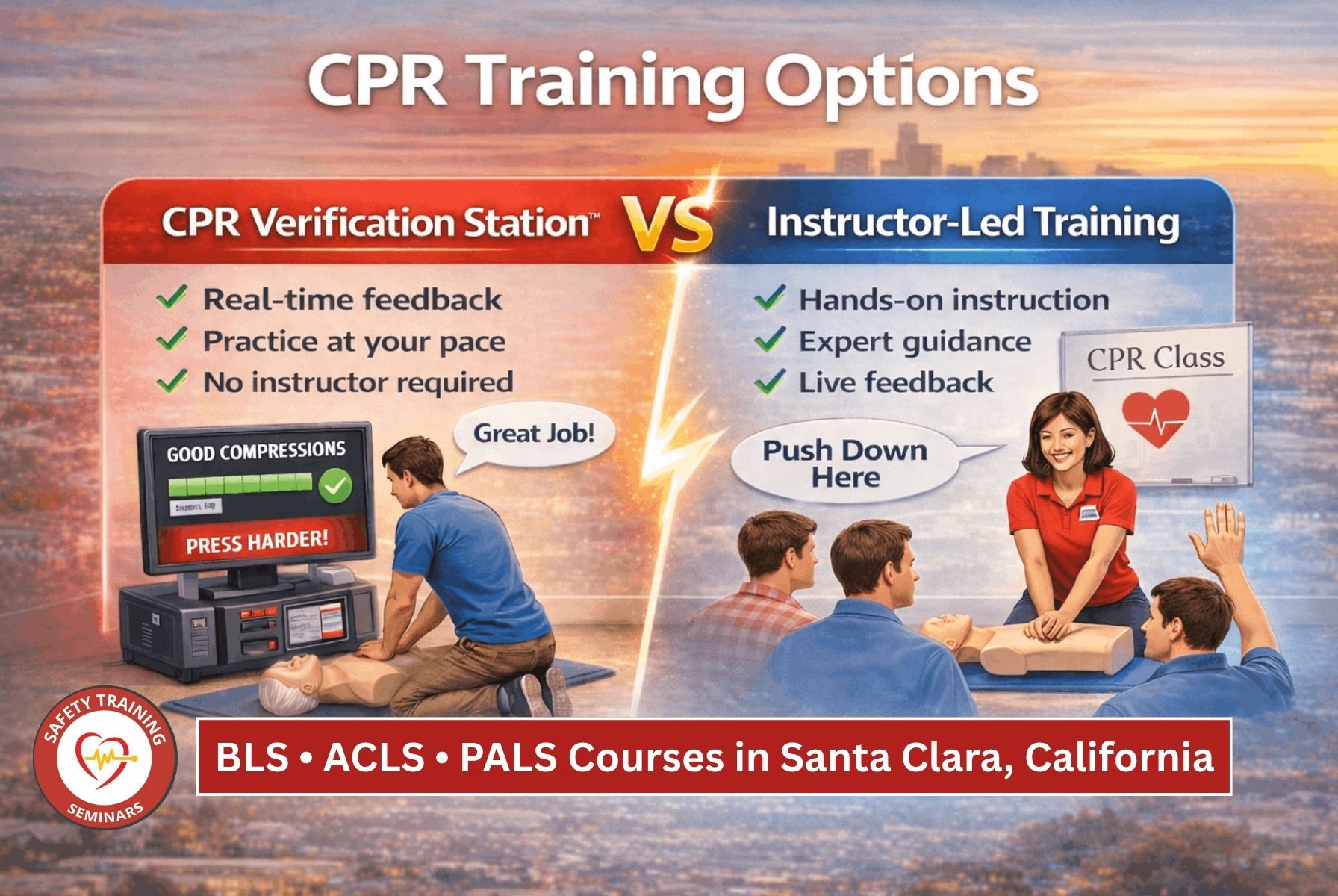
For healthcare professionals throughout Santa Clara and neighboring South Bay communities like Sunnyvale, Campbell, and Cupertino, two primary training pathways are available for completing BLS, ACLS, and PALS requirements:
- Instructor-Led Training — A fixed-schedule, in-person classroom session facilitated by a course instructor, delivering both cognitive content and hands-on skills practice in a single multi-hour block, typically running four to eight hours depending on the program.
- Self-Guided Learning™ + CPR Verification Stations — A flexible two-part model combining an adaptive online course completed independently on the learner’s own schedule with a focused, technology-evaluated skills session at a CPR Verification Station™ learning center.
Both pathways satisfy AHA requirements and result in an AHA Course Completion eCard upon successfully completing the course. Where they differ substantially is in the demands each format places on a working professional’s time, schedule, and commuting realities in one of the Bay Area’s most congested counties.
Traditional Instructor-Led CPR Training in Santa Clara
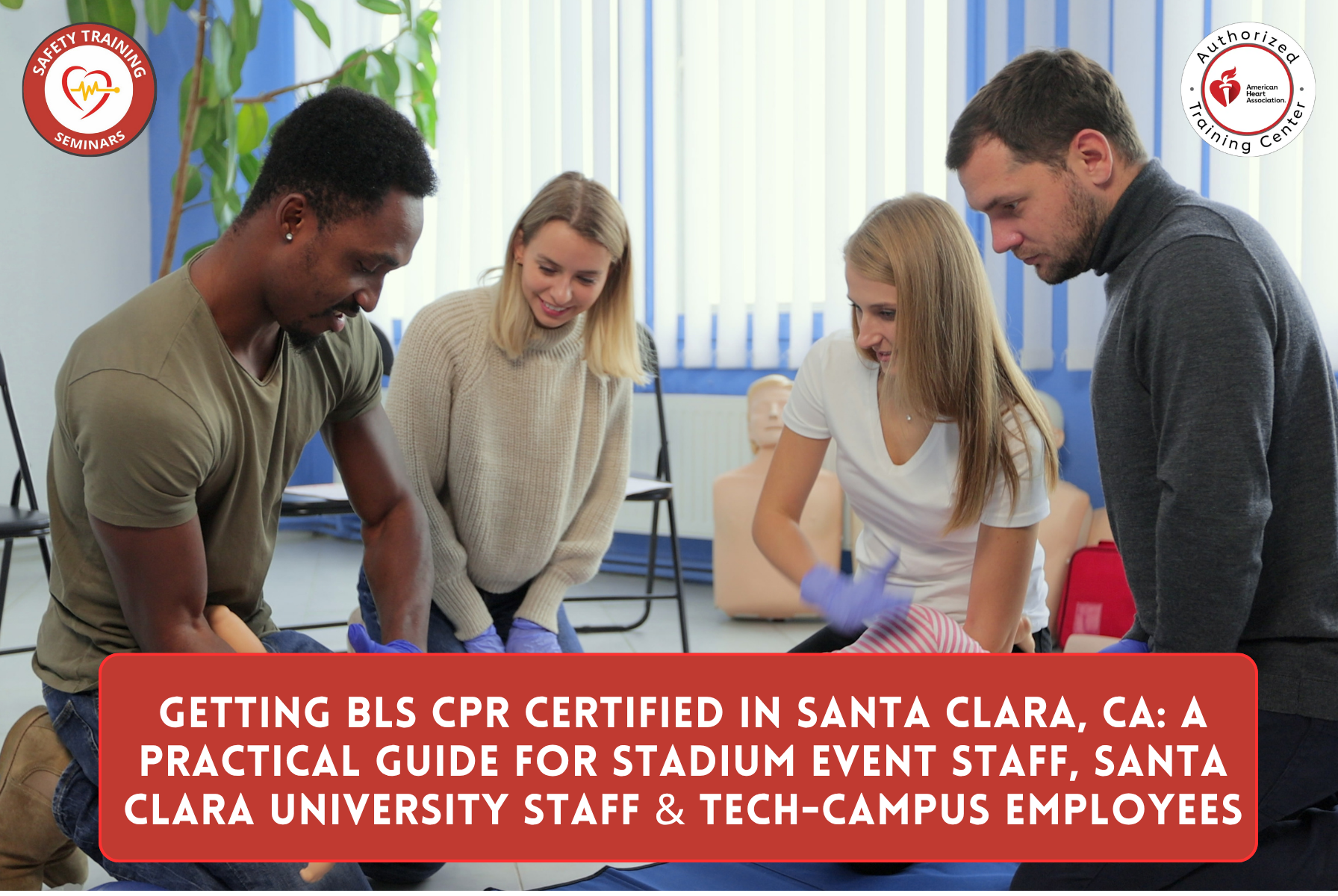
Instructor-led training has been the standard format for AHA BLS, ACLS, and PALS programs throughout Santa Clara County for many years. In this model, participants arrive at a scheduled training facility, join a cohort of fellow learners, and work through AHA-approved content under the direct guidance of a course instructor. The session flows from video instruction and live technique demonstration into hands-on skill stations covering chest compressions, airway management, defibrillation protocols, and scenario-based resuscitation exercises appropriate to the program level.
For clinical departments at Kaiser Permanente Santa Clara Medical Center or Santa Clara Valley Medical Center whose employers coordinate on-site group sessions, this format has historically worked reasonably well when institutional logistics handle the scheduling. Healthcare workers commuting between Santa Clara and facilities in San Jose, Sunnyvale, or Mountain View have also accessed employer-organized classroom sessions when departmental timing aligns. The friction emerges when individual professionals must independently locate, register for, and attend a session that actually fits their availability in one of the Bay Area’s most schedule-intensive working environments.
How Instructor-Led Training Works
A standard BLS class in Santa Clara’s instructor-led format typically runs between two and a half and four hours. ACLS courses extend significantly — often to six or eight hours — covering advanced cardiac rhythm interpretation, pharmacology protocols, complex airway management strategies, and multi-role team resuscitation scenarios requiring extended hands-on practice. PALS programs follow a comparable timeline adapted entirely to pediatric emergency care, with age-specific clinical frameworks and intervention protocols requiring deliberate, careful attention throughout each skill station.
The course instructor observes participant technique throughout the hands-on components, delivers real-time verbal coaching, and confirms when AHA performance criteria are satisfied. When all components are cleared, learners successfully complete the course and receive their AHA Course Completion eCard. For participants approaching complex clinical material for the first time, the structured classroom environment and live trainer presence can provide guidance that genuinely supports the learning process.
Limitations of Instructor-Led Classes
Santa Clara sits at the center of one of the Bay Area’s most consistently congested highway networks. US-101, I-280, and SR-87 all converge in the immediate vicinity, and the Lawrence Expressway corridor that connects Santa Clara to training sites in neighboring cities carries significant commuter volume during the morning and afternoon hours that bracket clinical shift changes. A healthcare professional in the Agnew neighborhood whose ACLS renewal is approaching and who needs to reach a training facility in San Jose or Sunnyvale during peak hours is absorbing meaningful travel time on top of a program that already demands a full day’s commitment.
Schedule availability compounds the challenge considerably. Popular ACLS and PALS sessions near major Santa Clara County medical centers fill up weeks in advance during high-demand renewal windows. A nurse from the Rivermark area whose compliance deadline is two weeks out may discover that every available classroom session within practical driving range of Santa Clara is already fully booked — leaving waitlisting as the only option when professional deadlines don’t accommodate delays. For shift workers managing rotating 12-hour patterns at Kaiser Permanente Santa Clara or Santa Clara Valley Medical Center, clearing a fixed full day from a schedule that changes weekly regularly crosses the line from inconvenient to genuinely unachievable.
The Rise of CPR Verification Stations in Santa Clara
Across Santa Clara County’s clinical community — one of the most professionally demanding in the entire United States — the mismatch between the traditional classroom model and the actual scheduling realities of Silicon Valley’s healthcare workforce has driven steady, visible adoption of more flexible, technology-supported training alternatives. CPR Verification Stations represent one of the most meaningful practical advances in that evolution. By replacing the group-paced, observer-dependent skills evaluation of the conventional classroom with a learner-controlled, objectively measured verification process, they’ve redefined what accessible, high-quality AHA skills assessment can look like for a workforce that manages its professional development the same way it manages everything else: with efficiency, precision, and a strong preference for tools that work on its schedule.
Safety Training Seminars has positioned itself at the forefront of this shift in the Santa Clara market, incorporating CPR Verification Station-based skills evaluation as a core program option alongside its instructor-led offerings — ensuring that every clinical professional in the South Bay corridor has a realistic, high-quality path to renewal regardless of how demanding their schedule becomes.
What Is a CPR Verification Station?
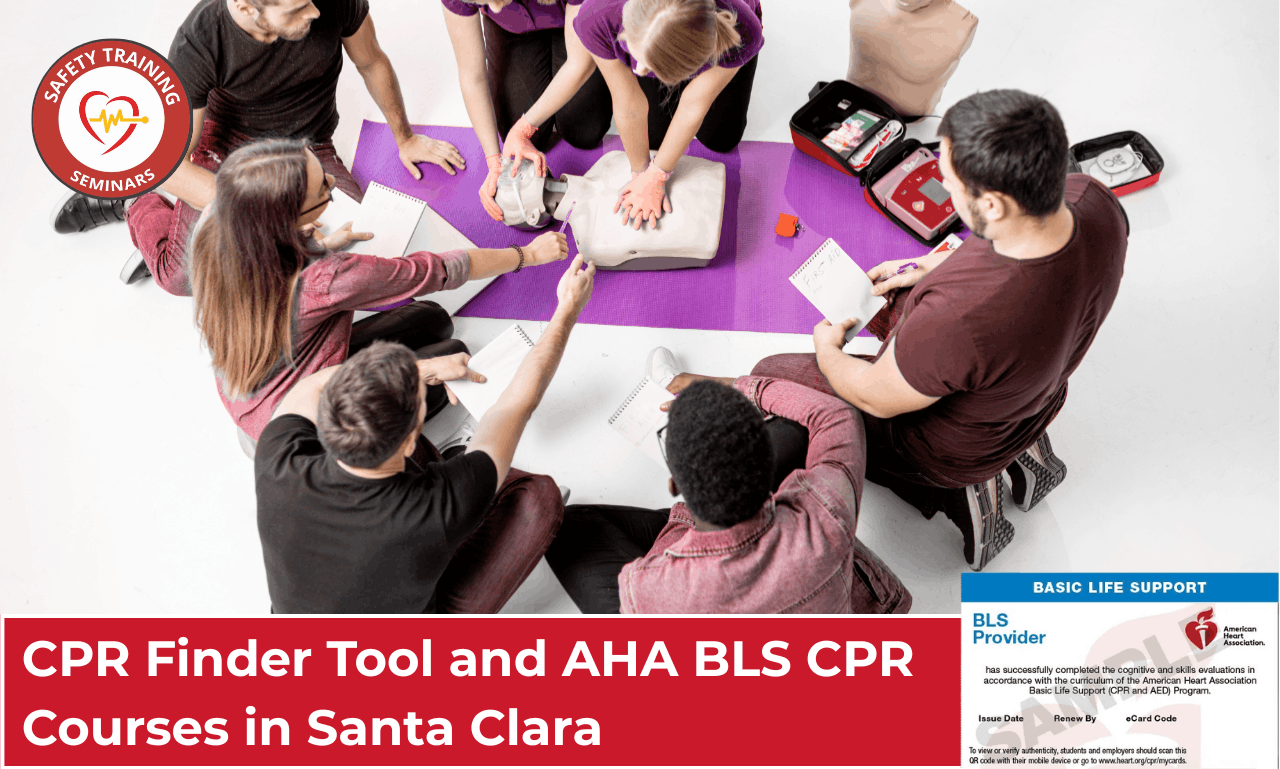
A CPR Verification Station™ learning center is a precision technology system built around sensor-equipped manikins that capture real-time, granular data on every element of CPR performance. Compression depth, rate, hand placement accuracy, full chest recoil between compressions, and the timing and volume of each ventilation are all measured continuously and assessed automatically against current AHA performance standards. The system generates immediate, objective feedback that doesn’t vary based on who is observing, how large the session is, or any factor outside the learner’s own demonstrated technique.
For Santa Clara’s clinical professionals — many of whom work in environments where data-driven performance measurement is simply the professional norm — a skills evaluation system built on those same principles of objective measurement carries intuitive credibility. The assessment is consistent. The AHA standard is applied uniformly. What the sensors record is what matters.
How Self-Guided BLS, ACLS, and PALS Courses Work
The online knowledge component of the Self-Guided Learning™ model is delivered through the HeartCode® Complete course — the AHA’s approved digital curriculum for BLS, ACLS, and PALS programs. What distinguishes HeartCode® from a conventional online video module is the intelligent, responsive system driving its content delivery: True Adaptive™ learning powered by Area9 Lyceum.
This platform continuously tracks how each participant engages with course material and adjusts the learning experience in real time based on demonstrated understanding. An experienced emergency department nurse from Santa Clara’s Mission neighborhood renewing her ACLS program doesn’t sit through foundational cardiac rhythm content she has applied clinically for a decade — True Adaptive™ learning powered by Area9 Lyceum identifies her existing competency with that material and advances to where genuine review adds value. For a newer paramedic working through the BLS course for the first time, the platform responds entirely differently — pacing deliberately, revisiting challenging concepts, and confirming comprehension at each stage before the next section opens.
Once HeartCode® Complete is finished, the participant schedules a brief, targeted skills session at a nearby CPR Verification Station™ location. The hands-on evaluation is time-efficient, focused, and produces an objective performance record against AHA standards. The AHA Course Completion eCard follows.
Key Advantages of CPR Verification Stations
For healthcare professionals across Santa Clara and neighboring communities including Sunnyvale, Campbell, and Cupertino, the practical advantages of this model are concrete, immediate, and directly relevant to South Bay clinical life:
- Complete scheduling freedom — The HeartCode® Complete online course can be started, paused, and completed at any time — late evenings, weekend mornings in the Rivermark area, or distributed across multiple sessions over a week or more.
- Genuine time efficiency — True Adaptive™ learning powered by Area9 Lyceum removes redundant review for experienced clinicians, meaningfully reducing total course time compared to the uniform pace of a traditional full-day classroom program.
- Objective, consistent evaluation — CPR Verification Station™ technology applies standardized AHA performance criteria uniformly, eliminating the natural variability of human observation across different instructors and session conditions.
- Locally accessible — Shorter, more flexibly scheduled skills sessions fit a Santa Clara professional’s actual weekly calendar far more naturally than a blocked full-day classroom commitment requiring navigation of Silicon Valley’s most congested corridors.
Why Healthcare Professionals in Santa Clara Prefer Self-Guided Learning
The professionals living in the Agnew and Rivermark neighborhoods of Santa Clara operate in one of the most productivity-oriented professional cultures in the world — and their approach to clinical professional development reflects that orientation. Many hold per diem arrangements across multiple Santa Clara County facilities, making forward scheduling weeks in advance essentially impossible. Others balance rotating shift patterns with family obligations and commutes that already consume a significant share of their non-clinical hours in one of California’s most expensive cities.
Self-Guided Learning™ courses address those realities with the kind of practical efficiency that Santa Clara’s clinical community genuinely appreciates. A medical assistant rotating between Kaiser Permanente Santa Clara and South Bay outpatient clinics can complete the BLS program online across several evenings at home, then book a focused skills session at a nearby CPR Verification Station™ location when her week cooperates — not when a classroom calendar has an opening. A respiratory therapist covering shifts at Santa Clara Valley Medical Center can work through the ACLS course during off-hours over two weeks, handling the cognitive component entirely on his own terms and completing the hands-on verification at a convenient moment rather than a predetermined one. That’s not a compromise in standards. In a professional community as time-conscious as Santa Clara, it’s precisely the kind of training design the workforce deserves.
Instructor-Led vs. CPR Verification Stations: Side-by-Side Comparison
Placed directly side by side, these two formats reveal a clear philosophical difference in how the training process is designed to work. Instructor-led training is organized around the delivery event — a fixed date, a fixed location, and a shared pace that applies uniformly to every participant regardless of their clinical background, specialty experience, or prior familiarity with the material being covered. For certain learners in certain situations, that structure provides genuine educational support. For most working clinical professionals in a schedule-intensive, high-cost, high-performance community like Santa Clara, it creates structural obstacles that the renewal process simply shouldn’t require.
Self-Guided Learning™ with CPR Verification Stations is organized entirely around the learner. HeartCode® Complete adapts content delivery to demonstrated knowledge through True Adaptive™ intelligence, ensuring every portion of the online course contributes genuine value rather than filling a predetermined time slot. The CPR Verification Station™ skills component is brief, locally accessible, and scored by technology that applies the same AHA standard consistently without variation. On flexibility, time investment, scheduling control, and evaluation consistency — the dimensions that most determine whether a Santa Clara healthcare professional can realistically complete their renewal — the Self-Guided Learning™ model delivers a decisively superior experience.
Which Option Is Better for You in Santa Clara?
Instructor-led training is the right fit if you’re completing an ACLS or PALS program for the very first time and benefit from the structure of a live, trainer-guided group learning environment. Some participants — particularly those working through complex multi-role resuscitation scenarios or pediatric emergency protocols for the first time — find that a course instructor physically present to demonstrate technique and provide immediate verbal feedback builds foundational confidence that’s harder to develop through independent study alone. Safety Training Seminars delivers instructor-led BLS, ACLS, and PALS sessions with the professional quality and curriculum rigor that Santa Clara County’s clinical community expects — making it a sound choice when the classroom format genuinely fits your learning style and schedule.
Self-Guided Learning™ is the stronger fit if you’re renewing familiar coursework, your schedule rotates unpredictably, or you need an efficient path to completing your BLS class in Santa Clara, finishing your ACLS program before a compliance deadline, or wrapping up your PALS course without sacrificing a full day off. Safety Training Seminars makes this pathway fully accessible through HeartCode® Complete paired with CPR Verification Station™ skills evaluation — a combination built around the real scheduling constraints and professional demands of clinical work in Silicon Valley.
Local Demand for CPR BLS, ACLS, and PALS Training in Santa Clara
The clinical renewal pipeline across Santa Clara County is active, diverse, and continuous throughout the year. Kaiser Permanente Santa Clara Medical Center on Homestead Road and Santa Clara Valley Medical Center are two of the most significant clinical employers in the immediate Santa Clara area, together maintaining active BLS, ACLS, and PALS requirements across their combined workforces. Professionals also commute regularly to Stanford Health Care in Palo Alto, Good Samaritan Hospital in San Jose, and O’Connor Hospital — all of which maintain their own compliance schedules for AHA-trained staff.
The Santa Clara Fire Department contributes its own contingent of emergency responders to the local AHA renewal pool. With two-year renewal cycles running continuously across all of these organizations and a Santa Clara County population that continues to grow in both size and healthcare complexity alongside the region’s technology-driven expansion, the demand for accessible BLS CPR Course near Santa Clara is consistent and substantial year-round. The strong adoption of flexible, technology-supported training formats reflects a workforce that has clearly outpaced the scheduling assumptions built into the traditional classroom model.
How Safety Training Seminars Supports Modern CPR Training
Safety Training Seminars serves healthcare professionals across Santa Clara, Sunnyvale, Campbell, Cupertino, and the broader Santa Clara County region by offering both instructor-led options and the Self-Guided Learning™ model supported by CPR Verification Station™ learning centers — ensuring every participant has a training pathway that genuinely aligns with their schedule, experience level, and professional context.
Available programs include BLS, ACLS, PALS, NRP, and First Aid, covering the complete range of AHA training requirements across clinical and non-clinical roles throughout the South Bay. Safety Training Seminars has built its reputation in the Silicon Valley healthcare market on a genuine commitment to making high-quality AHA training accessible, efficient, and aligned with how today’s clinical professionals actually work — not how a training provider’s calendar prefers they work. That commitment is what has made Safety Training Seminars a trusted resource for healthcare teams throughout Santa Clara County.
The Future of CPR Training in Santa Clara with Safety Training Seminars
In a city that sits at the global center of technology innovation, it’s fitting that the future of CPR training looks increasingly like what Safety Training Seminars is already delivering today. Personalized, adaptive learning experiences that respond to individual knowledge and respect the complexity of modern clinical schedules are progressively displacing the one-size-fits-all classroom model — and True Adaptive™ learning powered by Area9 Lyceum and CPR Verification Stations are at the forefront of that transformation.
Safety Training Seminars has aligned itself with this trajectory deliberately. By combining the adaptive intelligence of HeartCode® Complete with accessible CPR Verification Station™ skills evaluation alongside its instructor-led offerings, Safety Training Seminars ensures that Santa Clara’s clinical professionals have reliable, high-quality, and genuinely flexible access to AHA training that keeps pace with both technological advancement and the real demands of a workforce that leads the world in professional expectations. As Santa Clara County’s healthcare infrastructure continues to scale, Safety Training Seminars will continue to evolve alongside it — always oriented toward what clinical professionals actually need.
Start Your BLS, ACLS, or PALS Course in Santa Clara Today with Safety Training Seminars
Whether you’re pursuing a BLS course in Santa Clara for the first time, renewing your ACLS program before a compliance deadline, or completing your PALS training between shifts, Safety Training Seminars has a pathway built for your schedule and your professional standards. Healthcare professionals across Santa Clara County — from Rivermark to Agnew, from Sunnyvale to Campbell — are already completing their AHA training through Safety Training Seminars’ flexible program options, receiving their AHA Course Completion eCard, and returning to their clinical roles without the disruption of outdated, inflexible training formats.
The Self-Guided Learning™ path puts the timeline in your hands — complete HeartCode® Complete when it works for you, verify your skills at a CPR Verification Station™ learning center at your convenience, and receive your eCard efficiently. The instructor-led option delivers live, structured, trainer-guided learning when that’s what your situation genuinely calls for. Either way, Safety Training Seminars brings the quality, the flexibility, and the professional accessibility that Santa Clara’s healthcare community deserves. Choose your format, take the first step today, and stay current with the life-saving skills your patients count on.