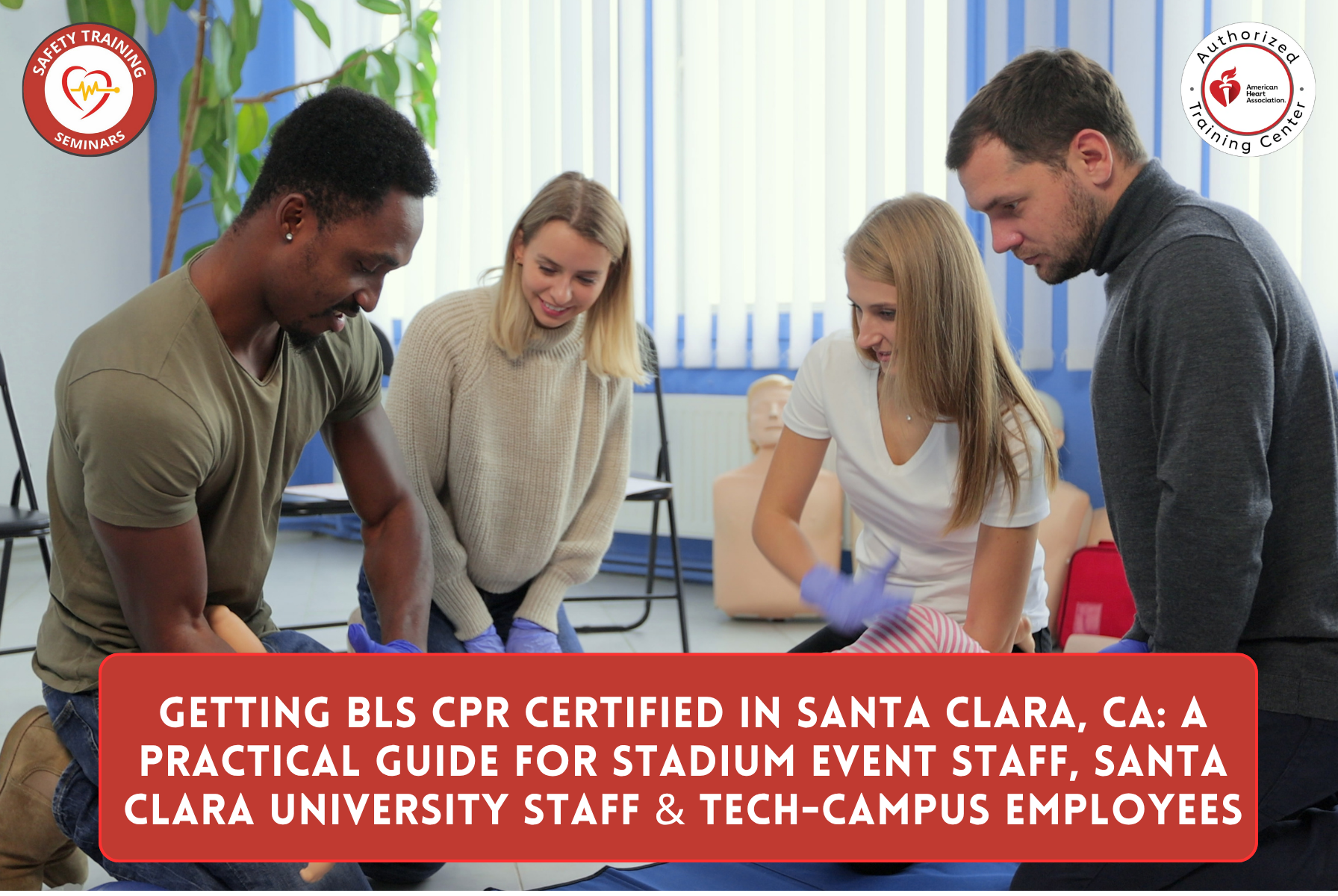
Stadium event staff, Santa Clara University employees, and tech-campus workers in Santa Clara, CA often ask a practical question: which CPR or life-support certification should come first? For most non-clinical workers, CPR and First Aid is usually the best starting point. For healthcare, dental, medical office, EMT, or student clinical roles, the BLS CPR Certification Course is usually the better first choice. ACLS, PALS, and NRP are more specialized and normally apply only when a job, school, hospital, or clinical program specifically requires them.
Key Takeaway: If your role is general workplace safety, campus support, guest services, facilities, security, coaching, childcare, or event operations, start by reviewing CPR and First Aid. If your role involves patient care, clinical response, healthcare training, or medical support, review BLS first before considering ACLS, PALS, or NRP.
The First Decision: Public Safety Role or Healthcare Role?
The best first certification depends on what you may realistically be expected to do. A stadium usher, office administrator, university department employee, lab coordinator, facilities worker, or tech-campus safety team member may need to recognize emergencies, call 911, start CPR, use an AED, and provide basic First Aid until professional responders arrive.
That is different from a healthcare worker responding in a clinical environment. A nurse, dental assistant, EMT, medical assistant, or healthcare student may need BLS because the course is designed for trained responders and patient-care settings.
Before choosing a course, read the exact wording from your employer, school, HR department, clinic, licensing board, or program coordinator. “CPR required” does not always mean BLS. “BLS required” should not be replaced with a general CPR class unless the organization confirms it.
What Stadium Event Staff Usually Need First
For people working around Levi’s Stadium events, the first course to review is often CPR and First Aid. Event staff may include guest services, crowd support, concessions supervisors, security teams, facilities staff, parking teams, operations workers, and event coordinators.
These roles are usually not clinical, but they do involve large public gatherings where a staff member may be nearby when someone collapses, chokes, becomes injured, or needs an AED. CPR and First Aid training can help workers understand how to respond calmly, alert emergency services, and provide basic help while EMS or onsite medical teams take over.
BLS may be necessary for onsite medical staff, EMTs, paramedics, nurses, or contracted healthcare personnel. ACLS and PALS would usually be limited to advanced clinical roles, not general stadium operations.
What Santa Clara University Staff Should Consider
University staff roles vary widely, so the right certification depends on the department. An athletics staff member, recreation employee, residence life worker, childcare program employee, teacher, security officer, or facilities team member may need CPR and First Aid for general safety responsibilities.
Campus health workers, clinical program staff, nursing-related students, athletic training personnel, or healthcare-facing employees may need BLS instead. If the requirement is tied to a health office, clinical placement, patient-care environment, or healthcare education program, the BLS CPR Certification Course is usually the correct course to review first.
Santa Clara University staff should also pay attention to whether their requirement mentions adult, child, or infant CPR. Staff working with students, children, athletes, visitors, or public events may have different training expectations than office-based employees.
Tech-Campus Employees: CPR and First Aid or BLS?
Most tech-campus employees do not need BLS unless their role includes healthcare, clinical research, medical response, or onsite health services. For software engineers, project managers, office teams, workplace coordinators, security staff, facilities teams, and employee safety volunteers, CPR and First Aid is usually the more relevant starting point.
Tech workplaces in and around Santa Clara, Sunnyvale, Mountain View, Palo Alto, and San Jose often include AEDs, emergency plans, and designated safety responders. A general CPR and First Aid course can help those teams respond to sudden collapse, choking, bleeding, burns, falls, or other workplace emergencies.
BLS becomes more relevant for occupational health staff, medical clinic employees, dental teams, EMTs, healthcare students, or employees whose job description specifically includes patient-care response. If your company simply asks for workplace CPR training, do not assume you need an advanced healthcare course.
Where BLS, ACLS, PALS, and NRP Fit
BLS stands for Basic Life Support. It is designed for healthcare professionals and trained responders who may need to provide CPR, AED use, breathing support when applicable, and team-based emergency response in in-hospital or out-of-hospital settings.
ACLS stands for Advanced Cardiovascular Life Support. It is generally intended for healthcare professionals involved in adult cardiac emergencies, advanced clinical response, emergency departments, critical care, paramedicine, or similar roles.
PALS stands for Pediatric Advanced Life Support. It applies to healthcare professionals who may respond to serious emergencies involving infants and children. PALS is not the same as child CPR for a teacher or childcare worker; it is more advanced and clinically focused.
NRP relates to neonatal resuscitation. Most stadium, university, and tech employees will not need NRP unless a healthcare employer, hospital, or clinical program specifically names it.
Santa Clara Course Planning Around Local Workplaces
Santa Clara has a mix of event venues, university departments, healthcare facilities, technology campuses, public agencies, hotels, restaurants, schools, and family services. That variety is why one certification answer does not fit every worker.
Someone near Levi’s Stadium may be thinking about crowd safety and AED readiness. A Santa Clara University department may be building a staff training plan. A Kaiser Permanente Santa Clara Medical Center employee, dental assistant, or healthcare student may be meeting a clinical requirement. A tech-campus team near Coleman Avenue, Central Expressway, or San Tomas Expressway may be preparing workplace responders.
Readers comparing location options can start with the Santa Clara CPR, BLS, ACLS and PALS class page for local course information. People who commute from nearby South Bay communities may also review San Jose CPR and healthcare certification options if that location better matches their workday.
How Safety Training Seminars Fits Your Next Step
After you identify the course name your role requires, review the local course page before registering. Safety Training Seminars offers Santa Clara course options at the Santa Clara CPR Training Center, 1400 Coleman Avenue, Suite E18-1, Santa Clara, CA 95050. This location may be relevant for people coming from Santa Clara University, nearby office corridors, and surrounding South Bay workplaces.
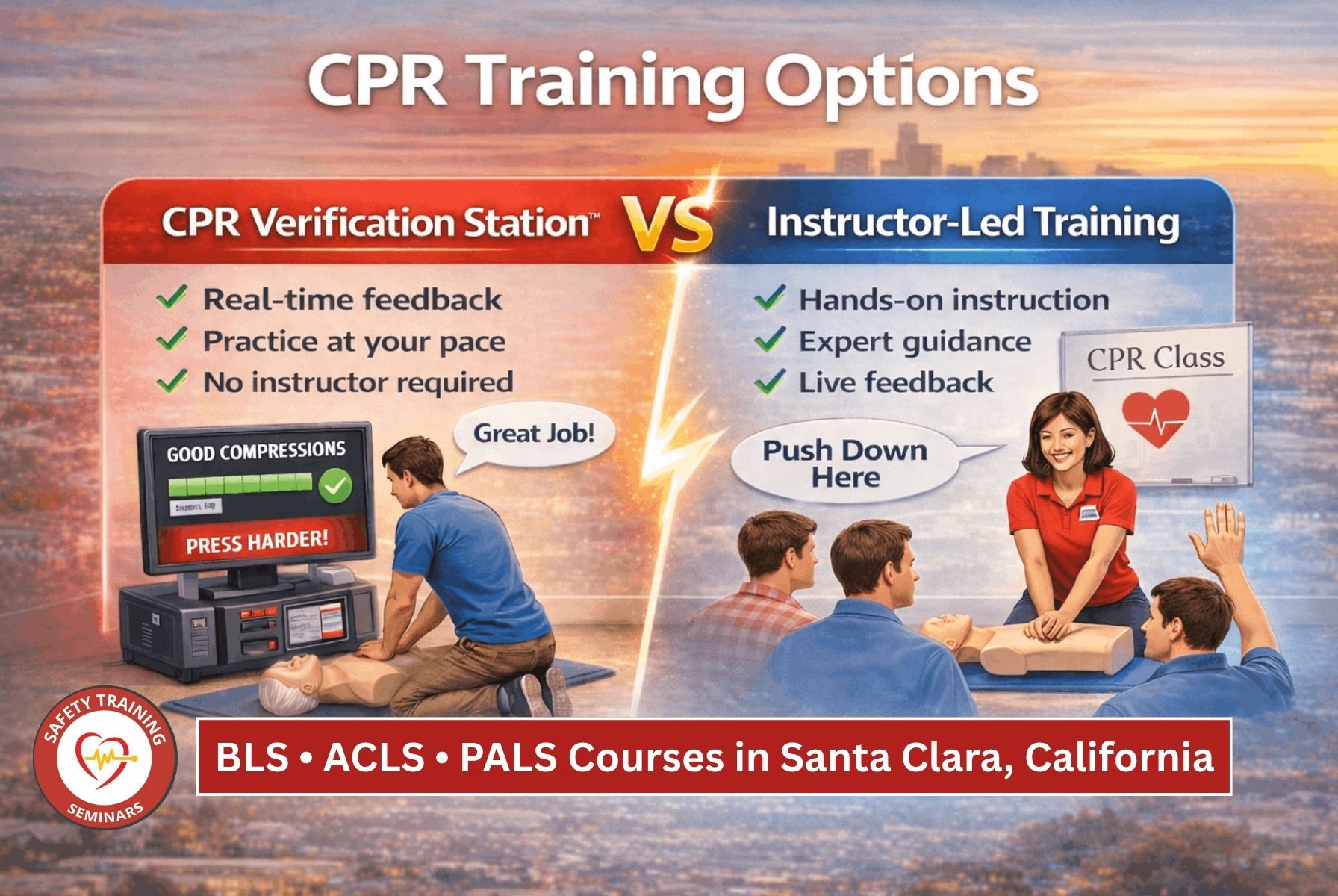
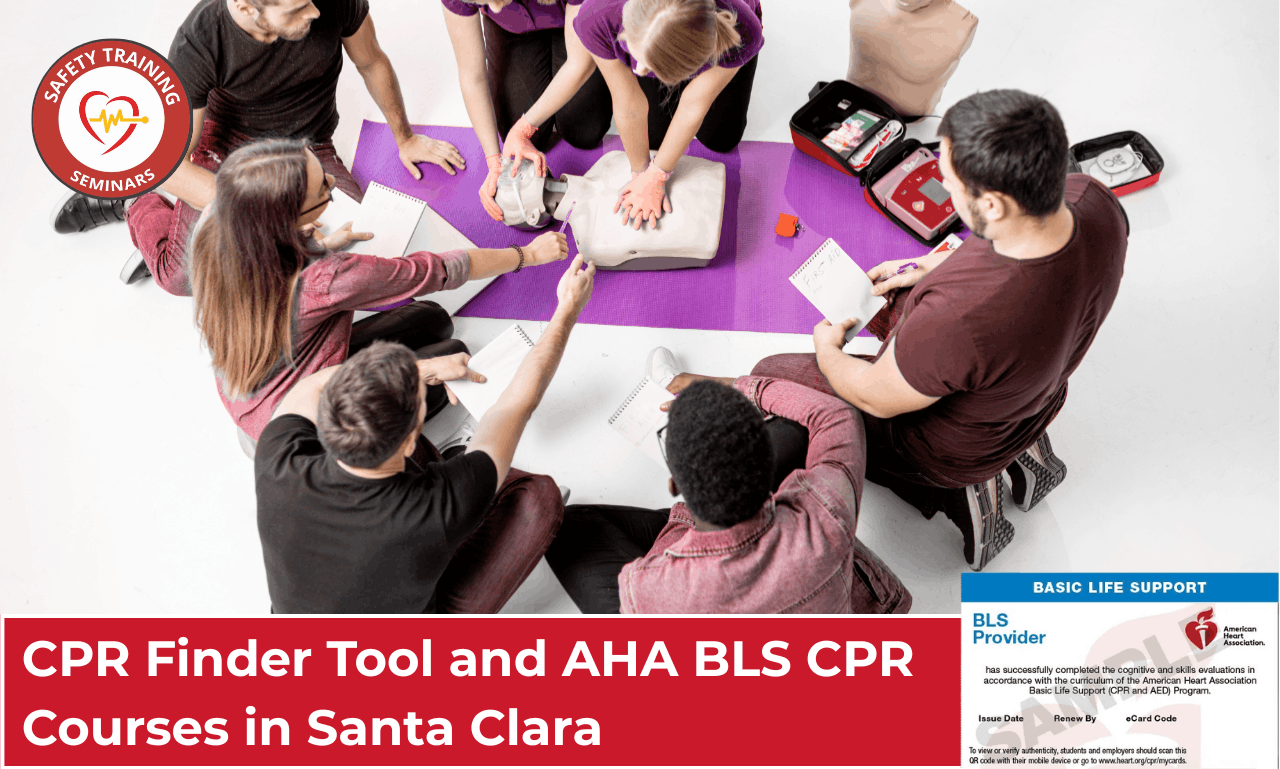
Self-Guided Learning™ courses may allow students to complete the online learning portion at their own pace before completing the required in-person skills session at the CPR Verification Station™ learning center. For BLS students, the HeartCode® Complete course option may be relevant when both online learning and skills completion are part of the pathway. After successful completion, students may receive an AHA Course Completion eCard when applicable to the selected course.
Employees and students commuting from nearby tech corridors may also compare Mountain View CPR and BLS course options or Palo Alto healthcare certification classes when planning around work, school, or commute patterns.
A Quick “Get This First” Checklist
Use this checklist before enrolling:
- Choose CPR and First Aid first if you are in guest services, general office work, event operations, facilities, security, childcare, teaching, fitness, coaching, or workplace safety.
- Choose BLS first if you work in healthcare, dental care, patient care, EMS, clinical education, or a medical office.
- Choose ACLS only if your role involves advanced adult cardiovascular emergency response.
- Choose PALS only if your healthcare role involves pediatric emergency response.
- Choose NRP only if your requirement specifically involves neonatal resuscitation.
- Confirm unclear requirements with your employer, school, licensing board, clinical site, or safety manager.
This checklist is especially useful for teams training multiple employees. A mixed workplace may need different course types for different roles.
FAQs About First Certification Choices in Santa Clara
Should Levi’s Stadium event staff get BLS first?
Usually not unless the worker has a healthcare or EMS role. General event staff, guest services, security, facilities, and operations employees usually start by reviewing CPR and First Aid. Onsite medical professionals, EMTs, paramedics, or nurses may need BLS or a more advanced course based on their role.
Do Santa Clara University employees need CPR and First Aid or BLS?
It depends on the department. Staff in recreation, athletics, childcare, residence life, security, or general safety roles may need CPR and First Aid. Health-related staff, clinical students, medical support workers, or patient-care roles may need BLS. Employees should confirm the exact course name before registering.
Is BLS required for tech-campus employees in Santa Clara?
BLS is usually not required for general tech-campus roles. Software, operations, HR, administrative, and office employees often need CPR and First Aid only if their workplace asks for emergency-response training. BLS is more likely for occupational health staff, dental teams, medical workers, EMTs, or clinical employees.
Can CPR and First Aid cover workplace emergency teams?
Yes, CPR and First Aid is often a practical starting point for workplace emergency teams, but requirements vary by employer. The course may support response to choking, sudden collapse, AED use, and basic injuries. Safety managers should confirm the accepted training type for their company policy.
Are ACLS and PALS useful for non-healthcare workers?
Usually no. ACLS and PALS are advanced healthcare courses. Non-healthcare workers who want to help in workplace, school, campus, or event emergencies should usually begin with CPR and First Aid unless a written requirement says otherwise.
Final Takeaway for Santa Clara Workers
For most stadium event staff, Santa Clara University employees, and tech-campus workers in Santa Clara, CA, CPR and First Aid is usually the first certification to review. For healthcare workers, dental teams, EMTs, medical assistants, and clinical students, BLS is usually the better starting point. ACLS, PALS, and NRP should generally be chosen only when a specific healthcare requirement names them.
Safety Training Seminars can help local workers compare CPR, First Aid, BLS, ACLS, PALS, and NRP course options. Before registering, review the appropriate course-location page, check the exact course name your employer or school accepts, and choose the training path that fits your real role.