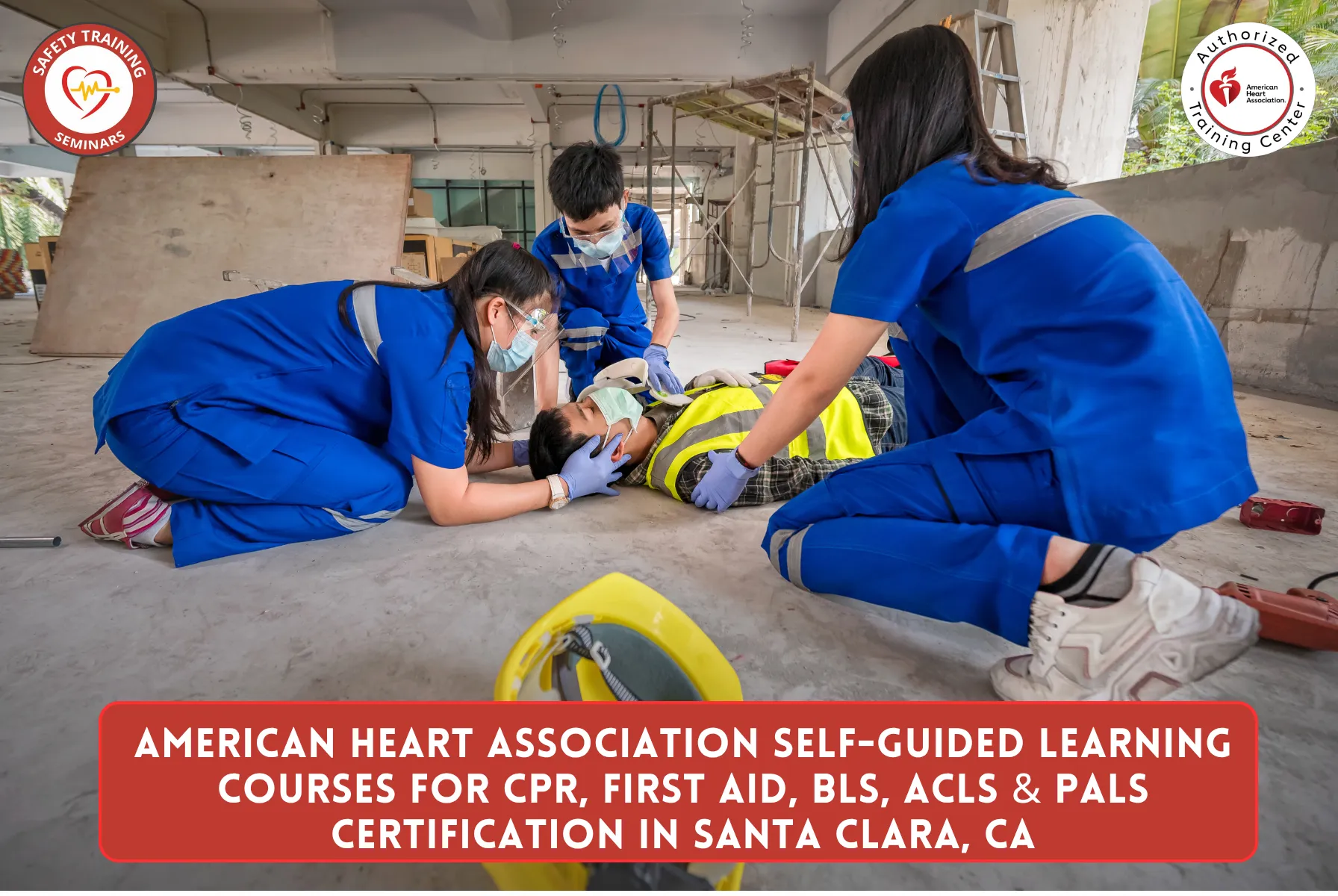
For people in Santa Clara who need American Heart Association training but cannot easily fit a fixed classroom schedule into their week, Self-Guided Learning can offer a more flexible approach. Rather than treating every online course as the same, the American Heart Association separates Self-Guided Learning from other delivery formats by combining independent cognitive learning with the applicable hands-on skills component.
This option can be relevant to healthcare professionals and students considering BLS, ACLS, or PALS, as well as workplaces and other learners looking for applicable CPR, AED, and First Aid training. The exact course depends on what your employer, school, healthcare organization, or other program requires.
For Santa Clara learners, understanding the difference between Self-Guided Learning, blended learning, and online-only education can prevent an easy mistake: choosing a course that does not match the required training format.
Key Takeaway
AHA Self-Guided Learning lets learners complete the educational portion independently and, for applicable courses, finish the required practical skills component through an approved verification process. It is particularly useful for people who value scheduling flexibility, but the correct course should always be selected according to the requirement attached to their job, school, or organization.
How American Heart Association Self-Guided Learning Works
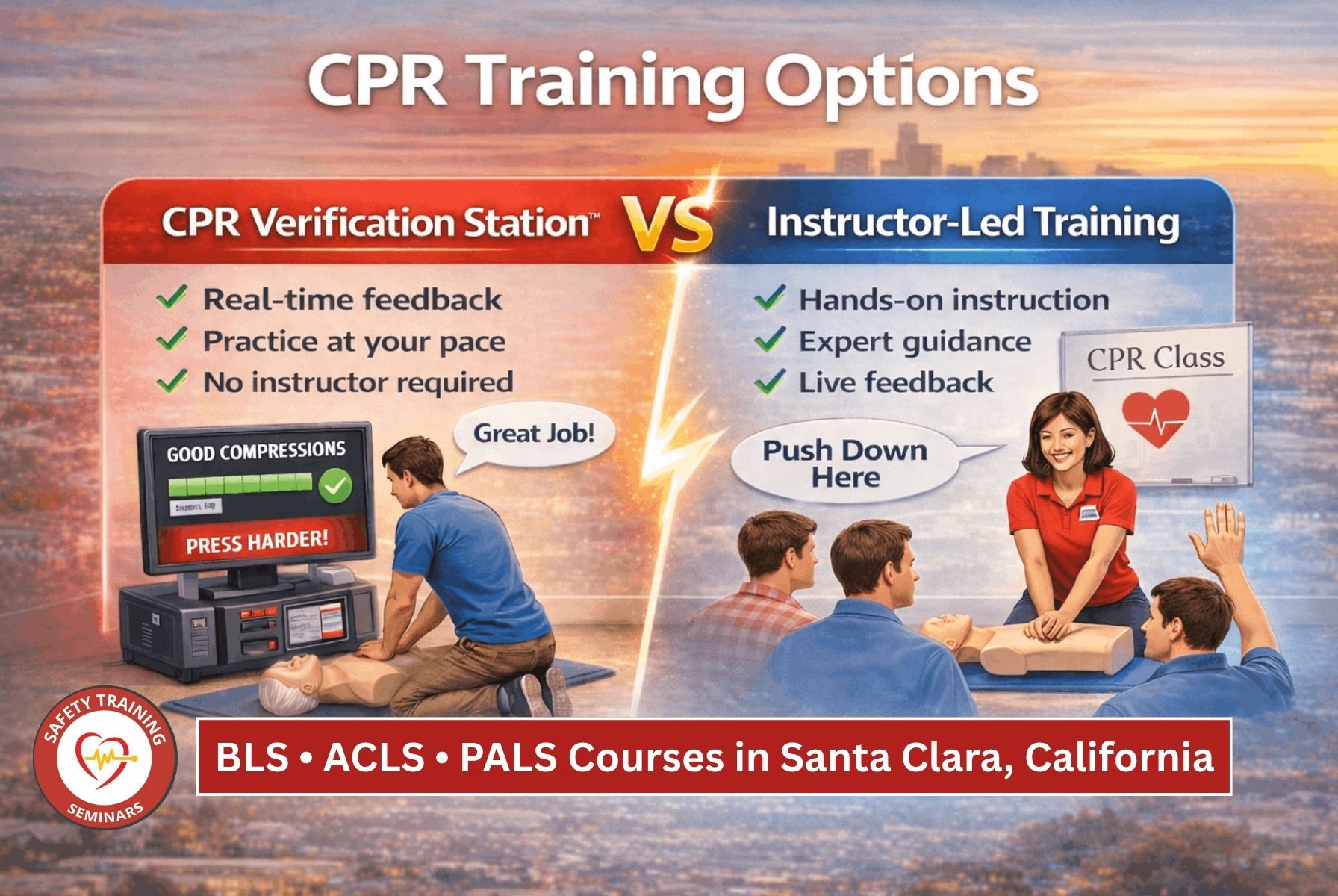
The phrase “self-guided” does not simply mean watching videos at home and receiving a completion document. The American Heart Association describes Self-Guided Learning as a format in which students complete the cognitive portion independently and then complete hands-on skills training using approved equipment that provides real-time feedback.
For BLS, ACLS, and PALS, the AHA currently describes Self-Guided Learning as combining self-paced online education with a self-guided skills session at a CPR Verification Station.
In practical terms, a learner generally needs to:
- Identify the specific course required.
- Complete the applicable educational material independently.
- Practice the required physical skills.
- Complete applicable skills verification or testing.
- Finish the course requirements and receive the applicable course completion documentation or eCard.
The details are course-specific, so learners should not assume that BLS, ACLS, PALS, and Heartsaver courses all follow precisely the same process.
BLS Classes in Santa Clara
Basic Life Support (BLS) is generally associated with healthcare professionals and appropriate healthcare students whose roles require healthcare-level resuscitation training. Nurses, nursing students, physicians, EMTs, paramedics, medical assistants, dental professionals, and other healthcare workers may encounter BLS requirements depending on their position or organization.
The AHA’s current BLS course options include Self-Guided Learning. Its HeartCode Complete pathway combines online learning with hands-on skills practice and testing using a CPR Verification Station, allowing the learner to control the pace of the educational portion.
That makes the format worth considering for Santa Clara healthcare students balancing coursework, clinical responsibilities, and other commitments. However, a student should first confirm that the school or clinical program accepts the specific course and format being considered.
For local course information, you can review the available BLS and CPR classes in Santa Clara before deciding which option fits your requirement.
ACLS Training for Healthcare Professionals
Advanced Cardiovascular Life Support (ACLS) is intended for healthcare professionals involved in managing adult cardiovascular emergencies. It is not simply an advanced version of a general-public CPR course.
The AHA offers ACLS through Self-Guided Learning as well as other formats. In the Self-Guided pathway, the cognitive portion is completed independently and the learner then completes the applicable hands-on skills portion at an approved CPR Verification Station.
This can be relevant to healthcare professionals whose work schedules make a fully scheduled classroom format difficult. Even so, ACLS requirements vary. A physician, nurse, paramedic, or other healthcare professional should confirm the exact requirement with the employer, healthcare organization, school, or program requesting the training.
PALS Classes in Santa Clara
Pediatric Advanced Life Support (PALS) focuses on the assessment and management of serious pediatric emergencies and is intended for appropriate healthcare professionals.
PALS Self-Guided Learning follows the same broad concept: independent cognitive education followed by hands-on skills work through an approved CPR Verification Station. The AHA describes its PALS Self-Guided Learning option as combining flexible online education with hands-on practice and skills testing.
For healthcare workers and students who may work with infants or children, PALS can be the relevant course when their professional responsibilities call for pediatric advanced life support training. The important point is to verify the requirement rather than selecting PALS simply because it is available as a flexible option.
CPR, AED and First Aid Self-Guided Training
Not every Santa Clara learner needs BLS, ACLS, or PALS. The American Heart Association’s Heartsaver® portfolio is designed for people with little or no medical training who need First Aid, CPR, and AED training for workplace or regulatory purposes, as well as people who want this type of training for personal preparedness.
Potential audiences include:
- Teachers and school employees
- Childcare professionals
- Coaches and fitness professionals
- Workplace employees
- Caregivers and parents
- Community members
- Employees with workplace safety responsibilities
Applicable Heartsaver options can include Self-Guided Learning, giving learners greater control over the educational portion while still incorporating the applicable practical component. The AHA lists Self-Guided Learning among its flexible Heartsaver delivery options.
This distinction is particularly useful when someone searches for CPR classes in Santa Clara but actually needs a broader First Aid, CPR, and AED course. Similarly, BLS should not automatically be substituted for First Aid when an employer specifically requests First Aid training.
Which Course Fits Your Situation?
Start with the requirement, not the delivery format.
| Course | Typical audience |
| BLS | Healthcare professionals and appropriate healthcare students |
| ACLS | Healthcare professionals involved in adult cardiovascular emergency care |
| PALS | Healthcare professionals involved in pediatric emergency care |
| CPR/AED | General public and workplace audiences |
| First Aid | Workplace, education, childcare, community, and general audiences |
These categories are useful for orientation, but they are not universal legal or employment rules. A healthcare program may specify BLS, an employer may request a particular Heartsaver course, or a clinical role may require ACLS or PALS.
Before enrolling, verify the requirement with the organization that will receive your training documentation.
Self-Guided Learning vs. Classroom and Online-Only Training
The main attraction of Self-Guided Learning is flexibility, but its structure is different from both traditional classroom training and a generic online-only course.
Self-Guided Learning: The learner completes the cognitive portion independently and then completes the applicable hands-on skills component through the designated verification process. This can suit people who need more control over when they study.
Traditional classroom training: Students attend scheduled instruction with an AHA Instructor, with cognitive learning, hands-on practice, and testing incorporated into the classroom experience.
Online-only learning: The learner may complete the educational component entirely online. Depending on the course and the requirement, however, an online-only format may not satisfy a requirement that calls for hands-on skills verification.
The AHA distinguishes Self-Guided Learning from its other course formats, including classroom and blended learning.
Why Self-Guided Learning Can Make Sense in Santa Clara
Santa Clara has a mix of healthcare students, professionals, educators, technology-sector employees, caregivers, and workplace teams. For some of these learners, the challenge is not finding educational material—it is fitting required training around an existing schedule.
A student may have classes and clinical responsibilities during the week. A working professional may have rotating responsibilities. A workplace may have employees working different shifts. A parent or caregiver may also prefer completing independent coursework around existing commitments.
Self-Guided Learning can address the scheduling side of the problem without eliminating applicable hands-on training. Someone traveling into Santa Clara from nearby communities may also consider the format when comparing local training options.
The practical approach is simple: identify the required course, determine whether Self-Guided Learning is an acceptable format for that requirement, and then review the available local training option.
Safety Training Seminars in Santa Clara
Safety Training Seminars provides a local training option for people researching CPR and BLS courses in Santa Clara. The listed Santa Clara training center address is 1400 Coleman Avenue, Suite E18-1, Santa Clara, CA 95050.
Before registering, review the course details and make sure the selected training corresponds to what your employer, school, or organization has requested. If you are comparing BLS, ACLS, PALS, CPR, AED, or First Aid, the name of the required course should guide your decision.
You can also review Santa Clara CPR, BLS, ACLS and PALS training options to learn more about the local course-location information available.
Why Choose Safety Training Seminars for CPR and BLS Training?
Choosing a local provider gives Santa Clara learners a specific place to investigate when they are comparing course formats. Safety Training Seminars can be considered by learners who want to research local CPR and BLS training while determining which AHA course fits their professional or workplace needs.
When evaluating the option, consider:
- Whether the course matches the requirement you were given
- Whether the delivery format is appropriate
- Whether applicable hands-on skills are included
- What course completion documentation is provided
- Whether the timing and learning approach suit your circumstances
- Whether you need BLS, ACLS, PALS, CPR/AED, or First Aid rather than another course
The best choice is the one that matches the actual requirement, not simply the course with the most flexible description.
FAQs About AHA Self-Guided Learning in Santa Clara
Is AHA Self-Guided Learning available for BLS?
Yes. The American Heart Association offers BLS Self-Guided Learning that combines independent cognitive education with a hands-on skills component through an approved CPR Verification Station. Learners should still confirm that the particular BLS format meets the requirement established by their school, employer, or healthcare organization.
Does Self-Guided Learning mean I never need hands-on training?
No. For applicable AHA Self-Guided Learning courses, hands-on skills are part of the completion process. The AHA specifically describes Self-Guided Learning as online cognitive education followed by hands-on skills training at an approved verification station.
Which AHA course is usually appropriate for a Santa Clara teacher?
A Heartsaver CPR, AED, or First Aid course may be more relevant than BLS, depending on the school’s requirement. Heartsaver courses are designed for people with little or no medical training and include options covering First Aid, CPR, and AED training. The teacher should confirm the exact course requested by the school or employer.
Can a healthcare student choose Self-Guided Learning instead of classroom training?
Possibly, but the school or program must determine whether the format is acceptable. BLS, ACLS, and PALS have Self-Guided Learning options, but professional and educational requirements can differ. A Santa Clara healthcare student should verify the required course and delivery format before purchasing or starting training.
What should I check before signing up for a Santa Clara course?
First, confirm the exact course your organization requires. Then check whether Self-Guided Learning is an acceptable format, whether hands-on skills verification is included when applicable, and what course completion documentation you will receive. These checks can help prevent enrolling in a course that does not match your employer, school, or program’s requirements.
Conclusion
American Heart Association Self-Guided Learning is designed for learners who want more control over the educational portion of training without necessarily giving up the applicable hands-on skills component. That makes it different from simply completing an online course and assuming the training requirement is satisfied.
For people in Santa Clara, the right choice starts with the course itself. BLS, ACLS, PALS, CPR/AED, and First Aid serve different audiences and purposes, so check your employer, school, or organization requirements first.
Once you know what is required, review the available local option from Safety Training Seminars and select the format that fits both the course requirement and your schedule.